The Execution of Lady Jane Grey
- Artist: Paul Delaroche
- Date: 1833
- Medium: oil on canvas
- Museum: The National Gallery
- Collection record: The National Gallery website
Listen to the free audio guide
About this artwork
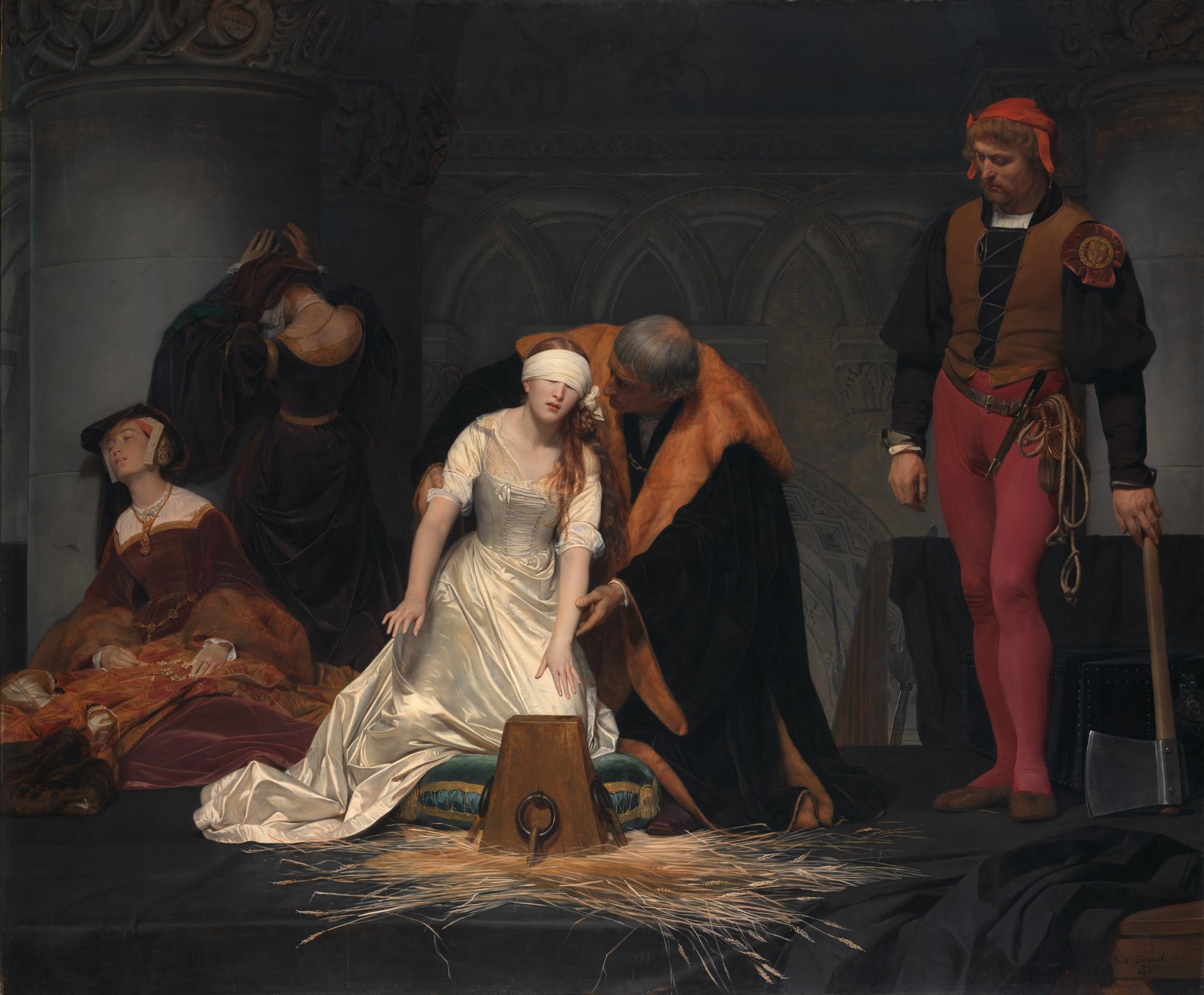
This is "The Execution of Lady Jane Grey" by Paul Delaroche. Painted in 1833, it's a powerful and emotive work that captures the final moments of the young Queen of England, Lady Jane Grey.
As you can see, Lady Jane is blindfolded and being guided to the execution block by Sir John Brydges, Lieutenant of the Tower. Her clothing has already been removed, leaving her standing starkly against the dark monochrome background of Romanesque architecture.
The painting's use of theatrical lighting and life-size figures creates a sense of spectacle, drawing us in and forcing us to confront what is about to happen. Lady Jane's innocence is highlighted by the bright sheen of her satin petticoat, and the contrast between her pale skin and the dark surroundings adds to the overall sense of drama.
Delaroche was known for his use of visual spectacle, and this painting is no exception. He drew on techniques from other art forms, including panoramas and tableaux vivants, to create a highly theatrical space that we can't help but engage with.
The executioner stands quietly in the background, waiting patiently as Lady Jane's life slips away. His pose and facial expression suggest a degree of compassion, adding to the overall sense of pathos in the painting.
This work was an immediate sensation when it was first exhibited at the Paris Salon in 1834, but its reception has always been mixed. While some critics praised its dramatic power, others saw it as too theatrical. Despite being forgotten for much of the twentieth century, "The Execution of Lady Jane Grey" remains one of Delaroche's most famous works, and a powerful commentary on the human cost of history.
See it in person
The Execution of Lady Jane Grey hangs in The National Gallery on Trafalgar Square, London — free to enter. Point your phone at any artwork there and audioguide.london plays a free audio guide in six languages — no app download needed.