The Fighting Temeraire
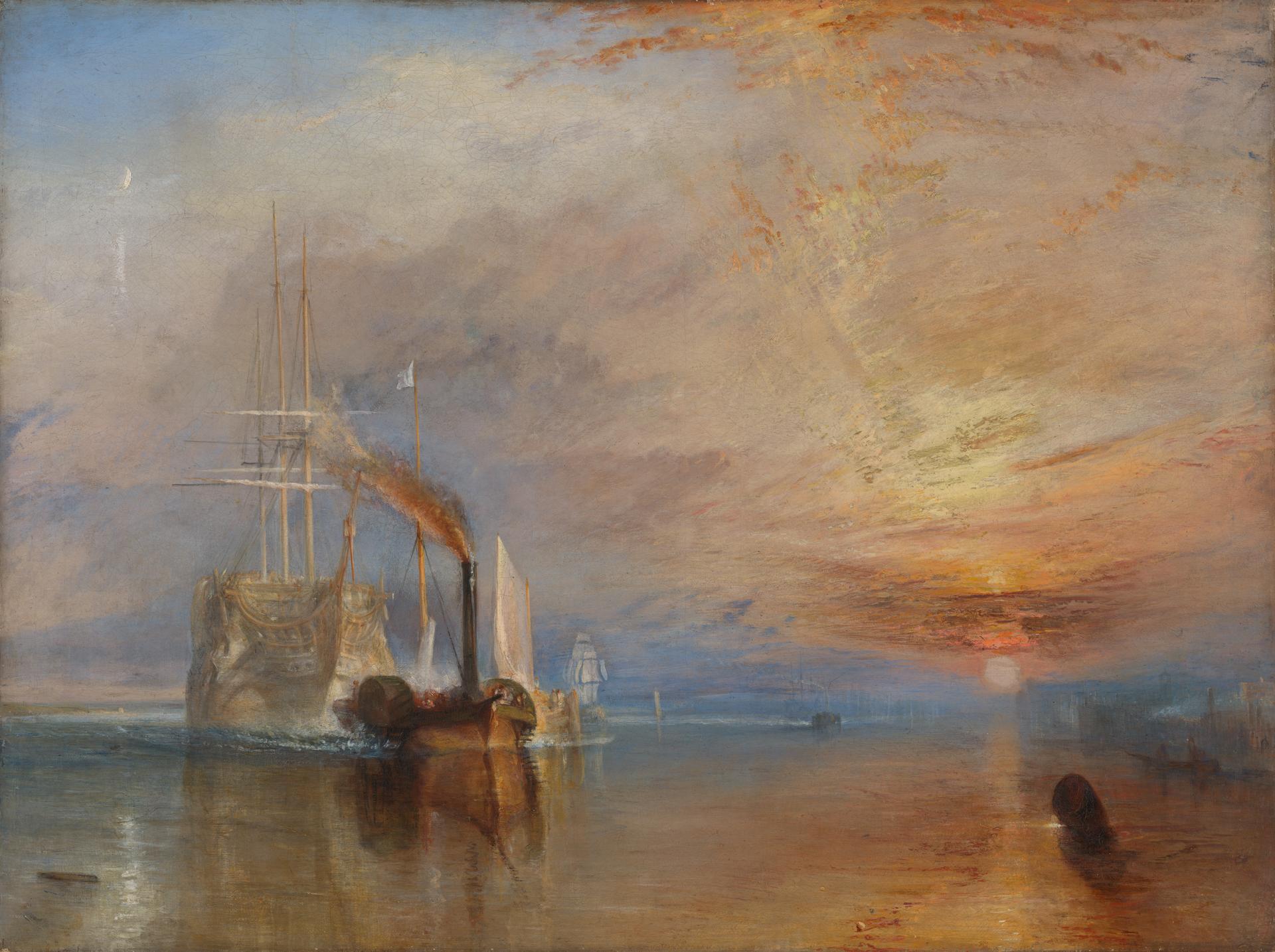
- Artist: Joseph Mallord William Turner
- Date: 1839
- Medium: oil on canvas
- Museum: The National Gallery
- Collection record: The National Gallery website
Listen to the free audio guide
About this artwork
This is The Fighting Temeraire by Joseph Mallord William Turner. Painted in 1839, this oil on canvas masterpiece is one of the most iconic works in the National Gallery's collection.
The painting depicts the last voyage of the HMS Temeraire, a veteran warship that played a distinguished role in the Battle of Trafalgar in 1805. The ship is being towed by a paddle-wheel steam tug from Sheerness in Kent along the river Thames to Rotherhithe in south-east London, where it was to be scrapped.
Turner's depiction of the scene is not just a realistic representation of the event, but also a symbolic one. He took liberties with the facts, showing the ship's three lower masts intact and its sails furled, to emphasize its dignity as it moves towards its final berth. The absence of the Union flag on the Temeraire adds to the pathos of the scene, and is reflected in the lines of poetry that accompanied the painting when it was exhibited at the Royal Academy.
The sunset that fills the right-hand third of the painting reinforces the narrative of the Temeraire approaching its final berth. Turner's use of colour here is characteristic of his style, with blazing copper hues that echo the tug's fiery smoke and add to the dramatic effect of the scene.
This painting is not just a memorial to the heroic history of the HMS Temeraire, but also a record of the ship's final journey. Its poetic and patriotic resonances have made it one of the most celebrated works in British art, and it remains a beloved and iconic masterpiece today.
See it in person
The Fighting Temeraire hangs in The National Gallery on Trafalgar Square, London — free to enter. Point your phone at any artwork there and audioguide.london plays a free audio guide in six languages — no app download needed.