April Love

- Artist: Arthur Hughes
- Date: 1855–6
- Medium: Oil paint on canvas
- Dimensions: support: 889 x 495 mm
- Museum: Tate Britain
- Collection record: Tate Britain website
Listen to the free audio guide
About this artwork
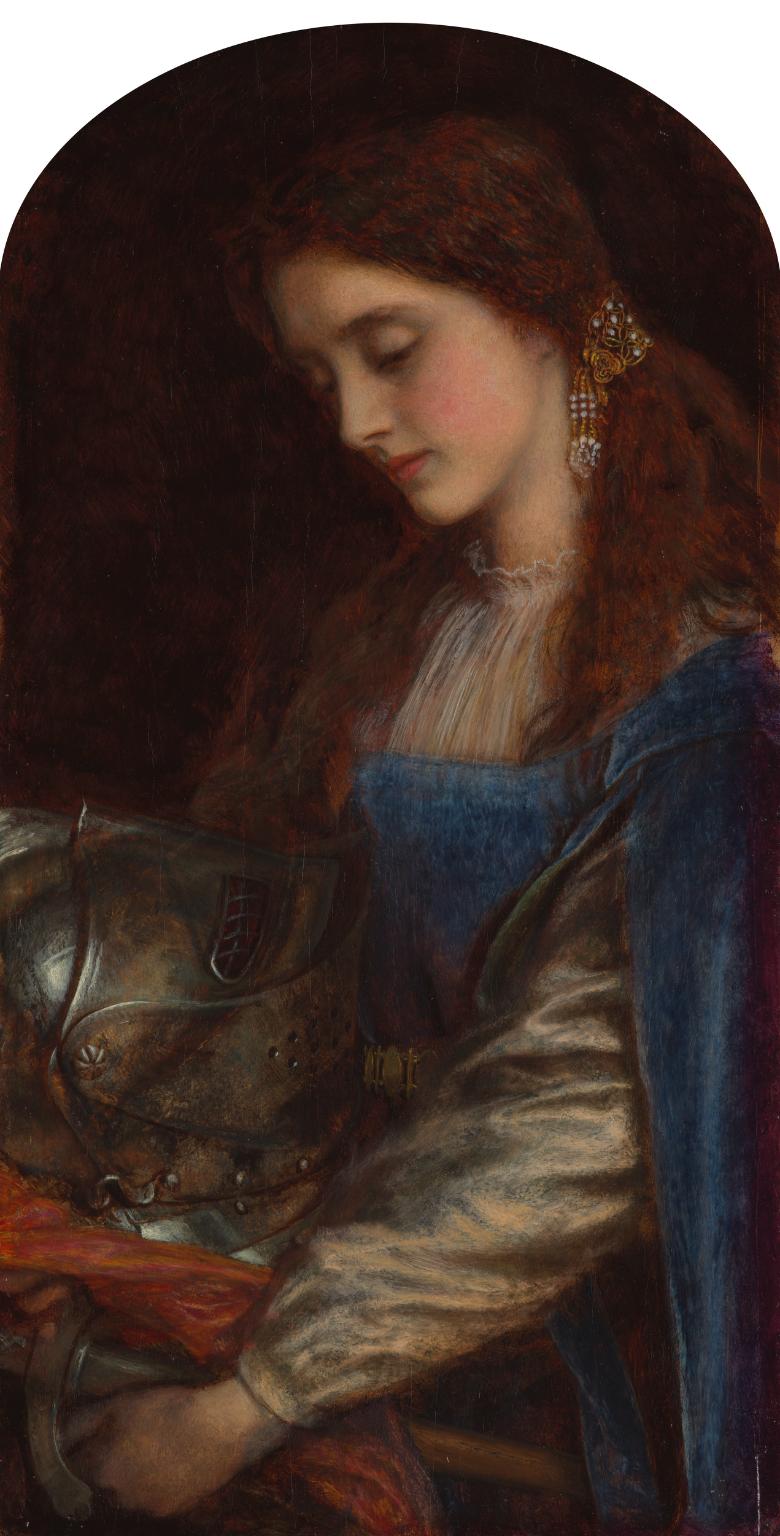
This is the “April Love” by Arthur Hughes, painted in 1855–6. The scene captures a fleeting moment of tension between a young couple. The woman turns away, her head tilted, while the man bows his head, pressing her hand between his own. The bright lilacs in the sunlit arbor are a classic symbol of young, hopeful love, yet the crushed rose petals scattered in the shadowy ground hint at trouble or disappointment beneath that surface.
Hughes created this work just a year after marrying his model, Tryphena Ford, and the painting was later bought by the designer William Morris. The scene is set in a modest, ivy‑clad summerhouse, and the colors—rich blues, greens, and the vivid dress—reflect the new industrial dyes and cheaper textiles that allowed people to dress more flamboyantly.
The piece is a hallmark of the Pre‑Raphaelite movement, noted for its detailed, symbolic elements: ivy represents everlasting life, the rose petals suggest a fleeting romance, and the light in the arbour creates a warm, almost pastoral mood. Hughes’ brushwork gives the figures a soft, almost translucent quality, making the emotions feel immediate and personal.
Overall, “April Love” is a tender, slightly bittersweet portrayal of early affection, rendered with the meticulous detail and vibrant palette that defined Hughes’ most celebrated work.
See it in person
April Love is in the collection of Tate Britain on Millbank, London — free to enter. Point your phone at any artwork there and audioguide.london plays a free audio guide in six languages — no app download needed.