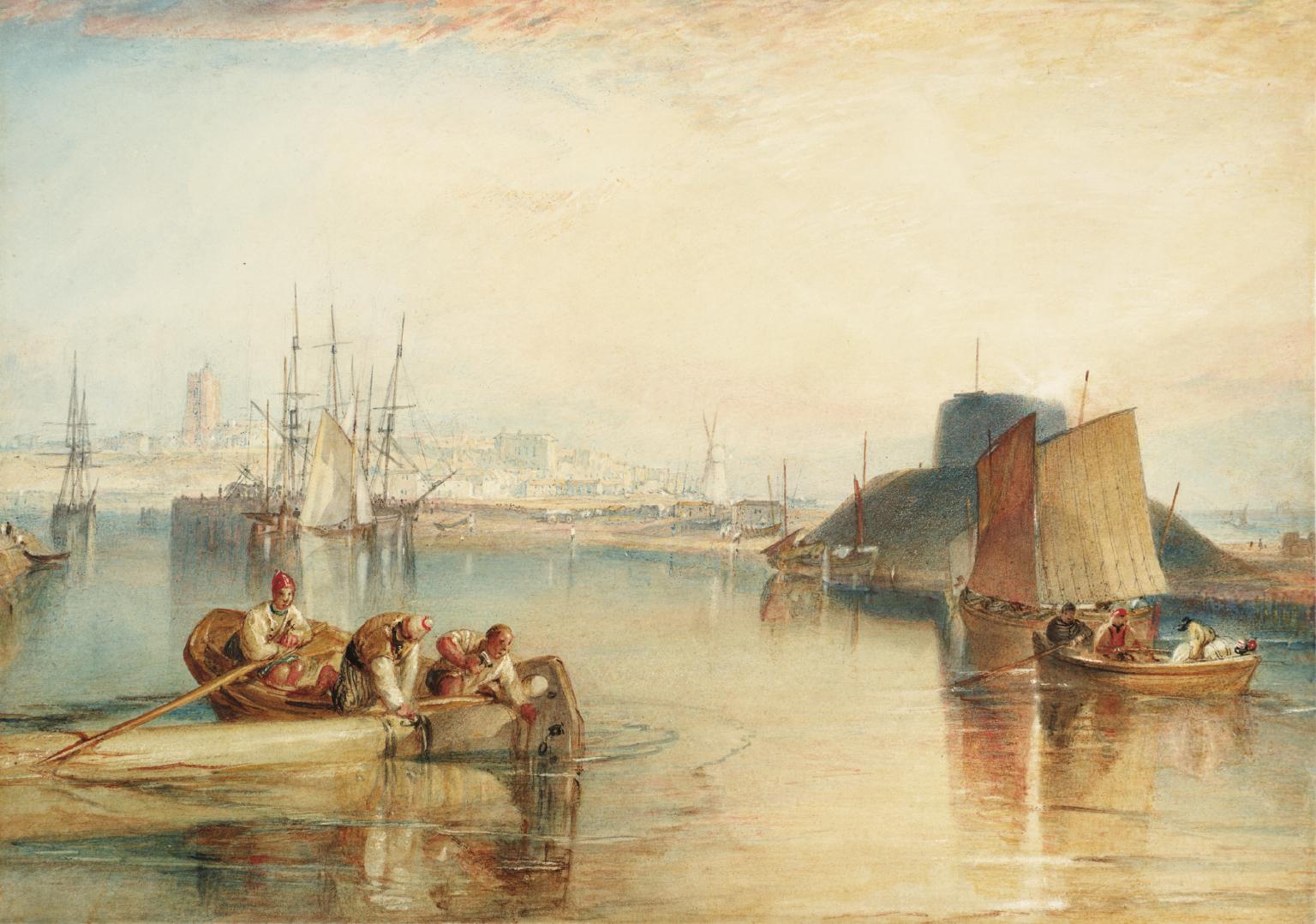
Almond Trees, Le Lavandou

- Artist: Lucien Pissarro
- Date: 1923
- Medium: Oil paint on canvas
- Dimensions: support: 597 x 730 mm
- Museum: Tate Britain
- Collection record: Tate Britain website
Listen to the free audio guide
About this artwork
This is “Almond Trees, Le Lavandou” by Lucien Pissarro. Painted in 1923, it captures a sunny spring day in the French Riviera, where rows of almond trees burst into blossom against a backdrop of rolling hills. Pissarro, born in 1863, was the son of the great Camille Pissarro and carried on his father’s legacy while forging his own voice. He was a living bridge between the French Impressionists—Monet, Renoir, and others who once visited his childhood home—and the early 20th‑century London scene of the Camden Town Group. After moving to London, he became close friends with Walter Sickert and joined the Artists International Association in 1935, where he was celebrated for his generous support of younger artists.
The canvas, finished in oil, measures just under 60 by 73 centimeters, so you can appreciate the careful brushwork and the way light filters through the almond blossoms. The composition balances the delicate floral detail with the broad sweep of the landscape, a hallmark of Pissarro’s style that blends natural observation with an impressionistic sensibility. Although the work was purchased in 1924, its influence resonated far beyond its early years, marking a significant moment where French plein‑air tradition met the evolving modernist currents of the time.
See it in person
Almond Trees, Le Lavandou is in the collection of Tate Britain on Millbank, London — free to enter. Point your phone at any artwork there and audioguide.london plays a free audio guide in six languages — no app download needed.