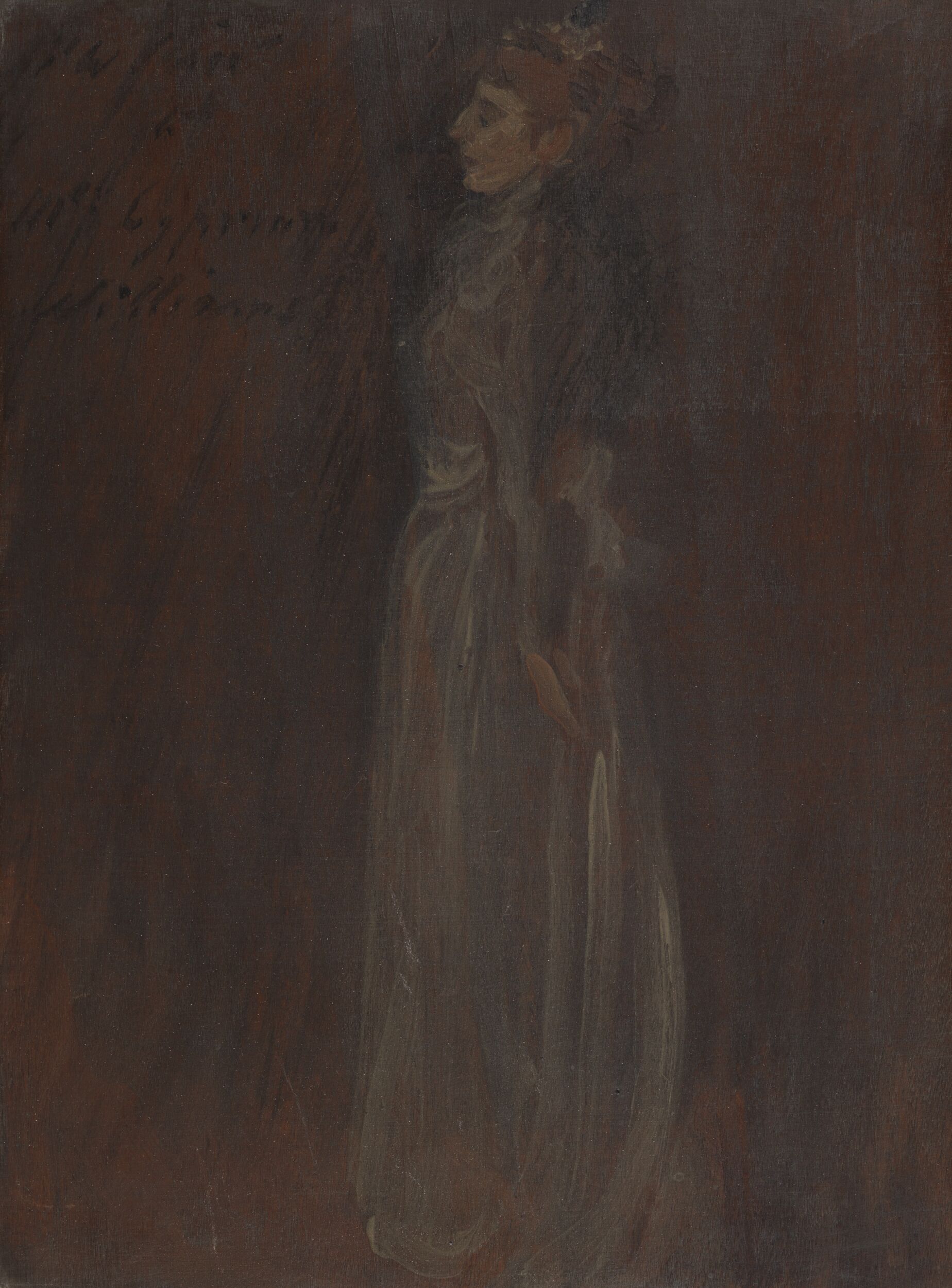
Hawes, Wensleydale

- Artist: Philip Wilson Steer
- Date: (circa) 1900 - 1910
- Medium: oil on canvas
- Museum: The Courtauld Gallery
- Collection record: The Courtauld Gallery website
Listen to the free audio guide
About this artwork
This is the *Hawes, Wensleydale* by Philip Wilson Steer, a charming early‑20th‑century oil on canvas that captures the rolling hills and soft light of the North Yorkshire countryside. Steer, a key figure in the late‑Victorian and Edwardian art scene, was known for his loose brushwork and keen eye for atmospheric detail. In this piece, he leans into impressionistic techniques—short, broken strokes that blend to form the misty valley and the distant ridges of Wensleydale.
The palette is gentle, dominated by muted greens, earthy browns, and a touch of pale sky blue that suggests a crisp, early autumn day. The light feels diffuse, diffusing across the fields and giving the landscape an almost dreamlike quality. Steer’s treatment of the foreground—thick, textured brushwork—creates a sense of depth, while the background recedes into softer tones, inviting the viewer’s eye to wander into the horizon.
Created around 1900‑1910, this painting sits squarely in the transition period where artists were moving from the detailed realism of the 19th century toward a looser, more expressive approach. Steer’s work reflects this shift, blending careful observation with a freer, more spontaneous handling of color and form. The canvas feels almost alive, as if the wind were gently moving the grass across the valley.
If you look closely, you’ll notice the subtle play of light on the topography—small glints on the dew‑slick grass, a hint of shadow in the dip of a hill, and the suggestion of a lone shepherd’s path winding through the landscape. It’s a quiet, almost meditative scene that invites you to pause and imagine the quiet bustle of a rural English day.
See it in person
Hawes, Wensleydale hangs in The Courtauld Gallery at Somerset House, London. Point your phone at any artwork there and audioguide.london plays a free audio guide in six languages — no app download needed.