A Landscape at Sunset

- Artist: Claude-Joseph Vernet
- Date: 1773
- Medium: oil on canvas
- Museum: The National Gallery
- Collection record: The National Gallery website
Listen to the free audio guide
About this artwork
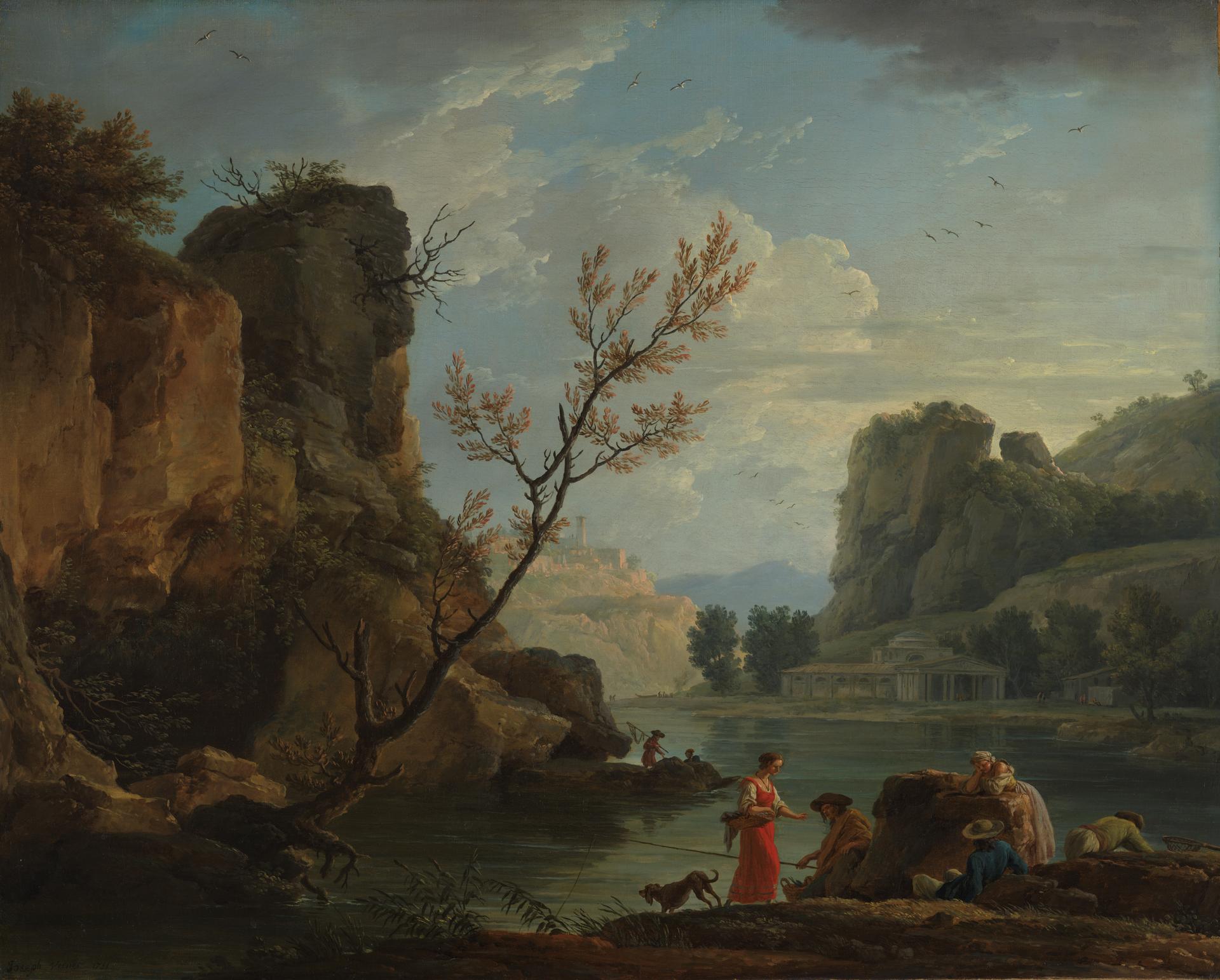
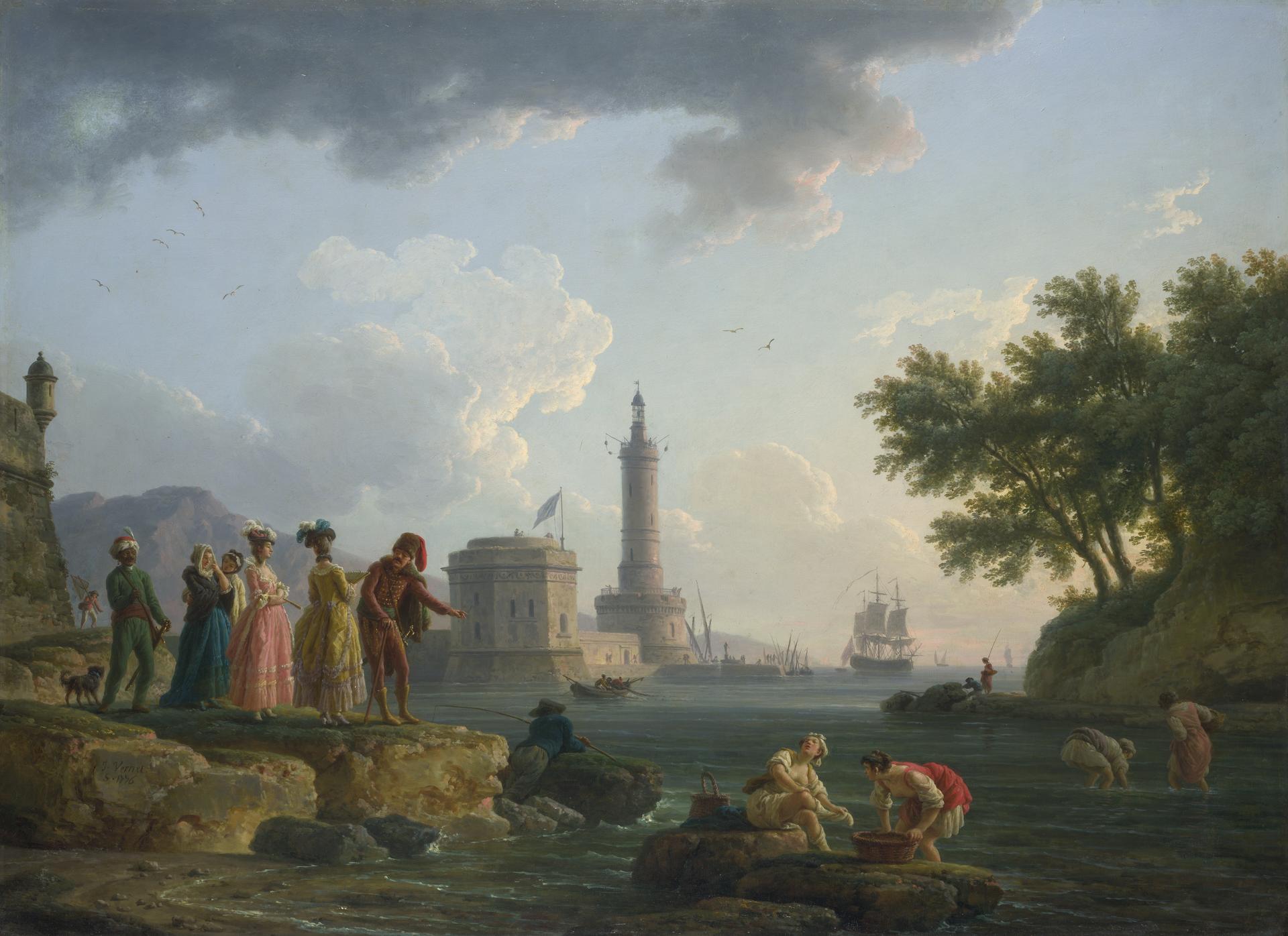
This is "A Landscape at Sunset" by Claude-Joseph Vernet. Painted in 1773, it's a beautiful example of the artist's ability to capture the subtleties of light and atmosphere.
As we look at the painting, notice how the golden setting sun is placed at the centre of the composition, casting a warm glow over the harbour below. The misty horizon adds depth to the scene, while the calm sea creates a sense of tranquility.
The foreground is bustling with activity - fishermen returning with their catch, women waiting to buy them, and even a couple enjoying a quiet moment together. But Vernet's intention wasn't just to depict everyday life; he was more interested in capturing the effects of light on water, air, and the human experience.
This painting follows in the tradition of Italianate seaport paintings, with its use of classical forms and attention to detail. The ships in Vernet's marine views were based on careful observation, and this one is a great example - look closely at the two-decker warship being towed into harbour.
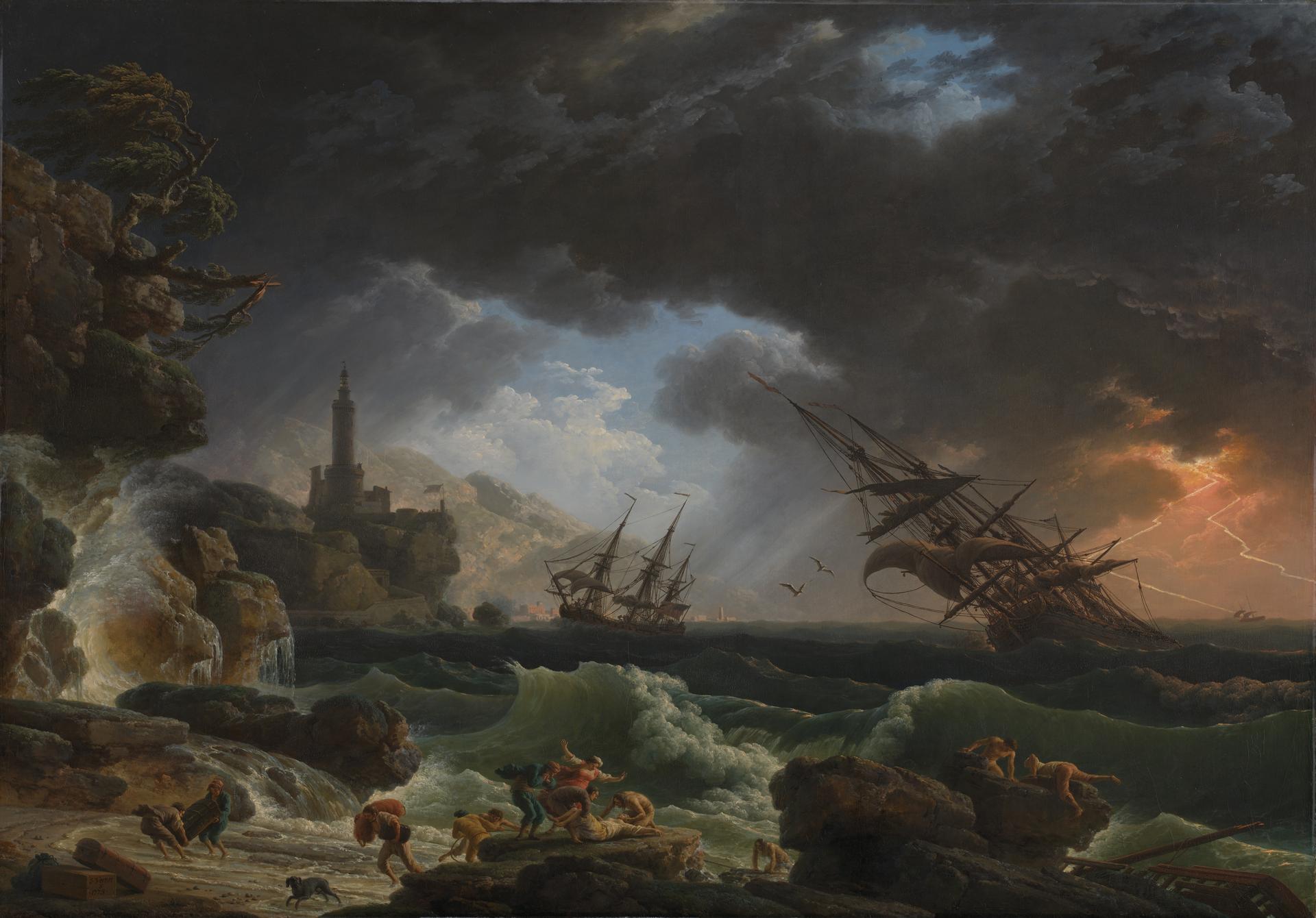
Vernet was known for his ability to evoke emotions through his art, and these paired seascapes are no exception. "A Landscape at Sunset" shows us the serene beauty of a summer evening, while its companion piece, "Tempête", reveals the contrasting power of nature's fury.
See it in person
A Landscape at Sunset hangs in The National Gallery on Trafalgar Square, London — free to enter. Point your phone at any artwork there and audioguide.london plays a free audio guide in six languages — no app download needed.